Geology Maps Online - Where You Can Get Free 1:250000 and 1:100000 Digital Maps for WA
Geology Maps online are available for free or you can purchase them if you wish via the Department of Mines, Industry, Regulation and Safety (DMIRS) in WA.
There is a huge array of different types of Geological Maps Available.
In fact they are available as :
- Individual factual Geological Maps.
- Tiled Geologic maps used in Tengraph Web (Online) or GeoMap (Offline in the bush.
- Intepreted Geological Maps showing the bedrock geology of WA.
- With Detailed "Explanatory Notes" for every 1:100000 and 1:250000 geologic Map of WA. This is crucial to understand the types of Geology that minerals occur in within each geological map .
Here is Where You Can Get FREE Online 1:250000 or 1:100000 Geological Maps
The Link to the DMIRS Geoscience publications Free Online Geological Maps from DMP Online e-Bookshop.
This page shows you how to use the Geoscience Publications Page to to access the Free 1:100000, 1:250000 geological Maps online or any other digital information you need for your analysis of good Gold Prospecting Locations.
The first step is to get to the Department of Mines Online Systems page and in the first step we have shown you how to do that if you ever lose the direct links which is in the box above.
Map Indexes for Geology Maps Online
Maps Index for Geological Maps Available for Free Download
This is the page to get the 1:100000 and 1:250000 Index maps for WA Index of Geological Maps of WA.
Scroll down the page and you will see the Geological map indexes available - you will probably be most interested in the 1:100000 and 1:250000 Series
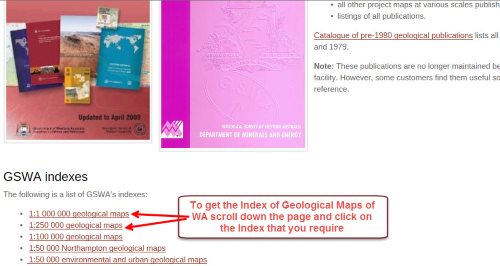
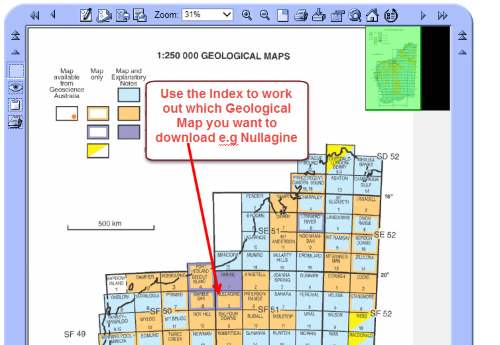
After you select the Geologic Map Name you want or the Explanatory Notes for the Geological Maps go to the DMP Online Bookshop and click on the Navigation index to select and download the required Map.
To download the PDF just click on "View PDF" the $ fee there is if you want a copy posted to you. Generally the PDF download option is free of cost.
The next three graphics show you how to view the Geology Maps online that you want to download and also other types of Maps and Explanatory Notes for the Geologic maps.
This is fully covered in the video above.
Geology Maps Online Access
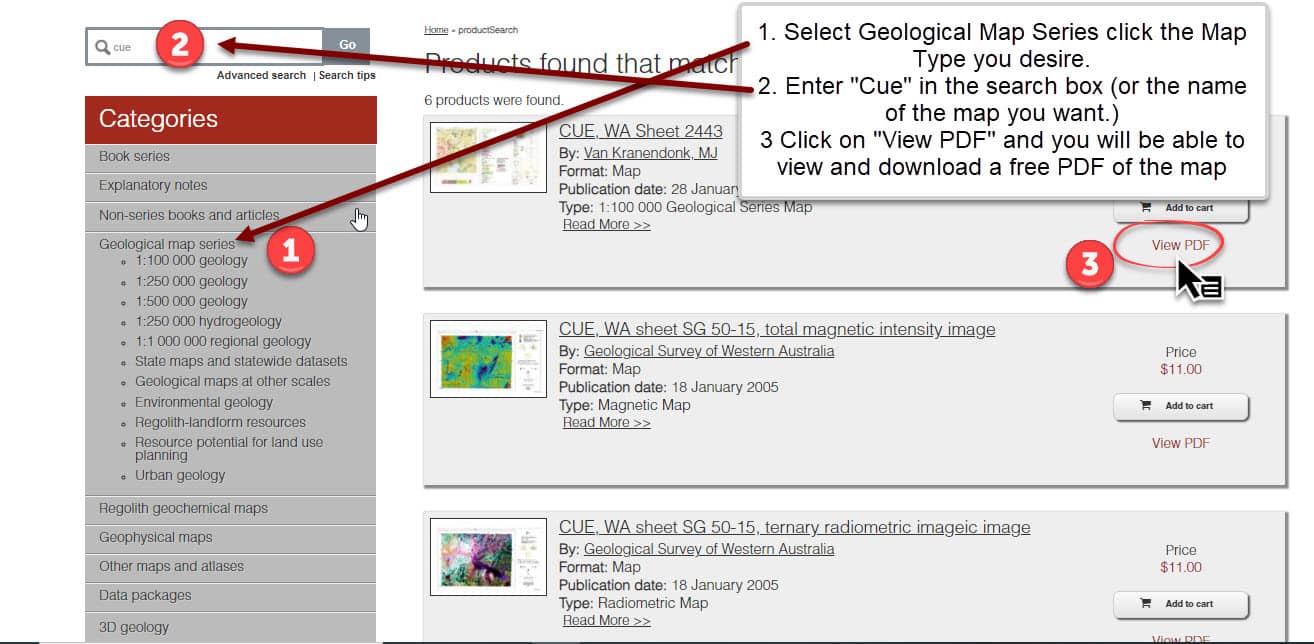 Geological Maps Online Select Type and Name of Map.
The Steps to get Free Geological Maps from DMP EBookshop are;
- Select the Geological Map Series you desire - there are a number of series available.
- Enter the name of the particular area you want (the Pot luck method) or search the Index for the specific Geological Map area you need.
- Click on the View PDF button when the map; comes up.
- Then click the download button to save the Geological Map you selected and viewed to you PC.
Magnetic Geological Maps Imagery
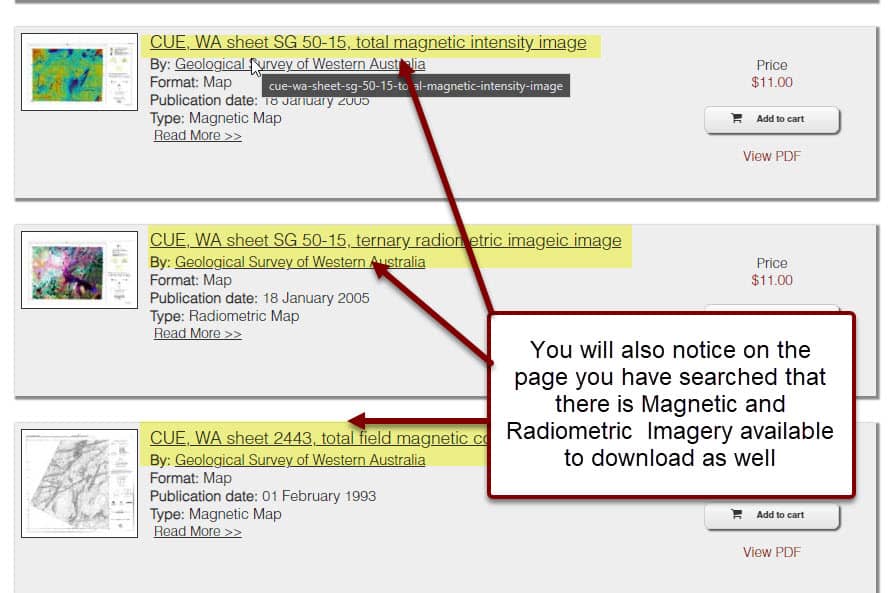 Magnetic Geological Map Imagery
Geology Maps Explanatory Notes Download
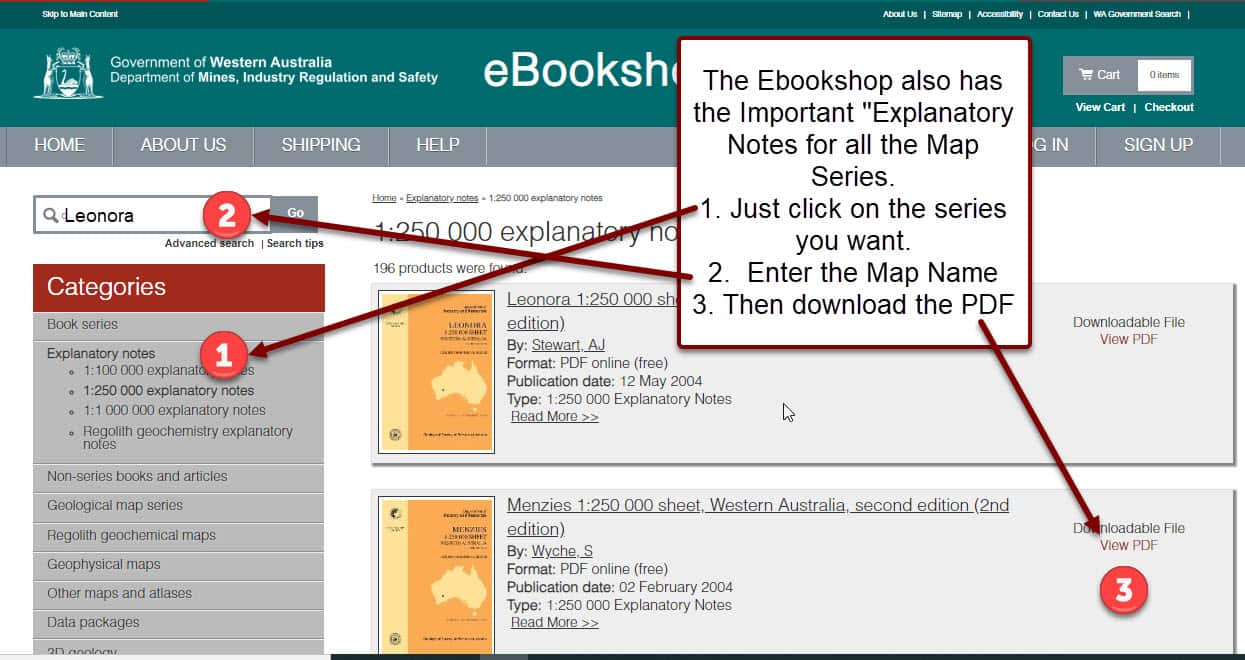 Geological Maps Online Explanatory Notes
What is Important About the Explanatory Notes for Geological Maps?
Here is some Information Extracted from the Cue 1:250,000 Geological Series map Explanatory Notes About the Economic geology of the area relating to "Gold"
Cue Sheet SG5015
Extracted from: REFERENCE GEOLOGICAL SURVEY OF WESTERN AUSTRALIA 11250 000 GEOLOGICAL SERIES-EXPLANATORY NOTES CUE WESTERN AUSTRALIA SECOND EDITION SHEET SG50- 15 INTERNATIONAL INDEX BY K. P. WATKINS, I. M. TYLER and A. H. HICKMAN PERTH, WESTERN AUSTRALIA I987 52411-1 MINISTER FOR MINERALS
"Gold in the region of CUE contributes roughly 10% of the State's overall gold production, excluding that of the famed "Golden Mile" in Kalgoorlie. While gold mineralization can be found throughout the area, a significant portion of CUE's gold comes from just two mines: Great Fingall (Day Dawn) and Big Bell. Both of these mines, along with Triton at Reedy, have extensive workings that reach depths exceeding 300 meters. Deep drilling conducted at Great Fingall and Big Bell has revealed the presence of substantial gold mineralization extending down to depths greater than 1,000 meters.
In other areas of CUE, gold production has generally occurred at depths less than 50 meters, emphasizing the importance of supergene enrichment. The productive gold deposits in CUE can be classified into six main categories:
(a) Shear zones and/or quartz veins within alternating units of banded iron-formation and mafic volcanics or intrusives. Notable examples include Tuckanarra, Stake Well, Lake Austin, Mainland, Pinnacles, and Moyagee.
(b) Shear zones and/or quartz veins within mafic or ultramafic rock, sometimes intruded by felsic porphyry. Cuddingwarra, Cue (south), Eelya (south), Reedy (Triton-Rand), Ryansville, Day Dawn, Mount Farmer, and Warda Warm fall into this category.
(c) Grey-white banded or jaspilitic chert, accompanied by fine-grained clastic sedimentary rocks and felsic and mafic volcanics. These formations are commonly sheared and/or veined by quartz. Tuckabianna, Weld Range, Reedy (Cullculli-Turn of the Tide), Burnakura, Lennonville, and Winjangoo exemplify this category.
(d) Quartz veins found in granitic rock, often in close proximity to greenstone contacts or containing greenstone enclaves. Cue (north) is a notable location for this type of deposit.
(e) Hydrothermally altered clastic sedimentary rocks, potentially of volcanogenic origin. Big Bell serves as a relevant example in this category.
(f) Eluvial and colluvial deposits can also be a source of gold. Cue, Tuckabianna, Tuckanarra, Burnakura, Lake Austin, Mainland, and Lennonville all exhibit the presence of such deposits.
These various categories illustrate the diverse combinations of factors, such as the composition of the host rock, structural modifications, and subsequent emplacement, that contribute to the presence of gold in the CUE region's geological landscape."
So, this information provides you the exact rock structures and geology in the area to find gold localities.
All you need to do is target the same types of geology in the area.
Alternatively, chase the secondary gold sources in the area downstream, downhill, in salt lakes, laterites and calcretes away from the Primary sources.
Other Pages About Geological Maps
Gold Maps Can Easily be Created from Geological maps
Using geological maps as gold maps to target gold nuggets and gold geology in WA..
Different Types of Geological Maps
Different Types of Geological Maps can be used to see where gold has been found and the geology anywhere in WA
Geological Maps - Explained and How to Find Gold Using Free Maps
Geological Maps - Essential to find gold in WA - where you can get get free geological gold maps for WA
Return to Geological Maps Page from Geology Maps Online page
This Website Changes Over Time
So please bookmark us and come back regularly.
OR.. sign up for our egold newsletter to keep up to date with trends and knowledge about gold prospecting!
In Aussie Dollars
![[Most Recent Gold Price Quotes in Australian $]](https://www.kitconet.com/charts/metals/gold/t24_au_en_auoz_2.gif)
In US Dollars
![[Most Recent Gold Price Quotes in US $]](https://www.kitconet.com/charts/metals/gold/t24_au_en_usoz_2.gif)